
If you’ve worked on immigration cases, you know that a Request for Evidence (RFE) can sometimes be vague, repetitive, or overly broad – and writing a response can eat up more time than it should. Levering the power of AI Large Language Models (LLMs), is a quick and reliable way to start using this emerging technology to optimize firm operations in a high-reward/low-risk way.
An LLM, like ChatGPT can help organize and clarify information, especially when it comes to analyzing what the RFE is actually asking for, brainstorming helpful evidence, and generating prompts or drafted language to get you started.
Here is a quick guide to using ChatGPT to support your RFE workflow.
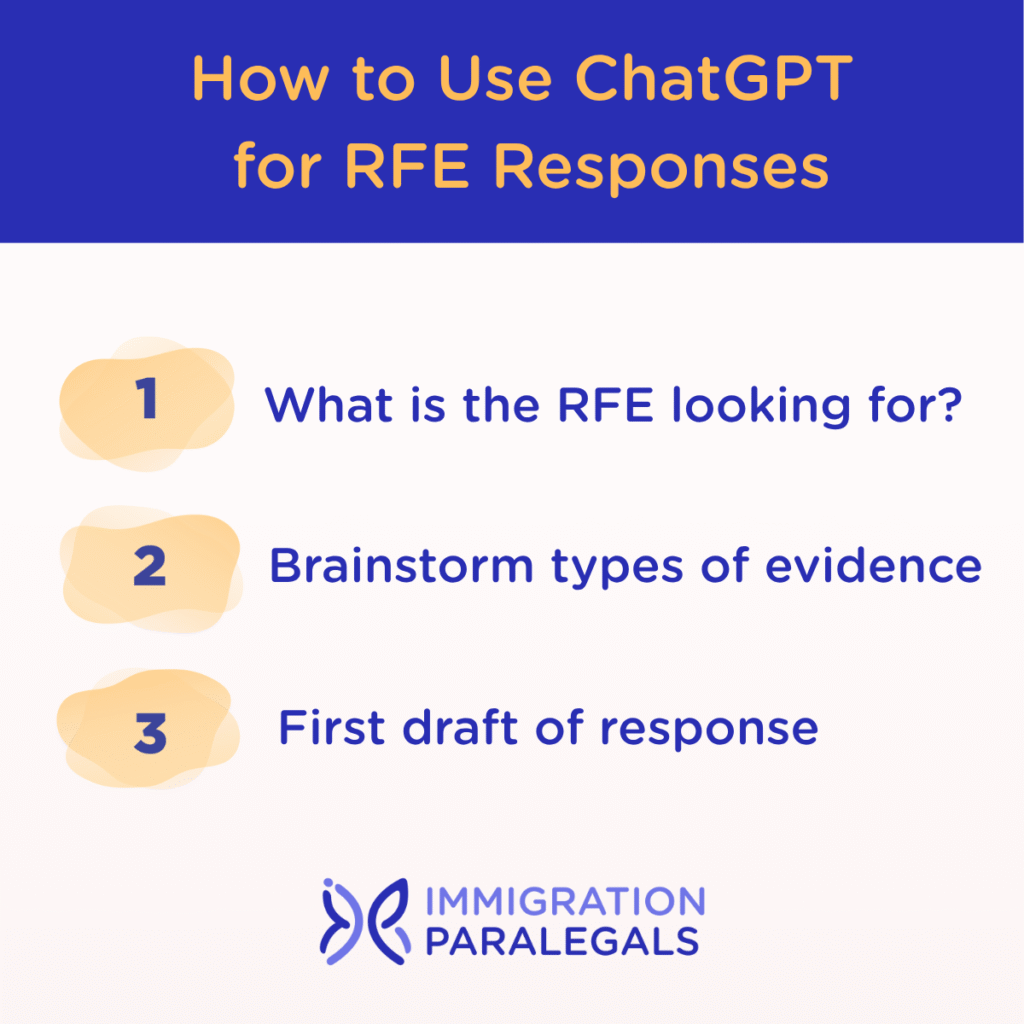
Step 1: Understanding the RFE
Sometimes the hardest part of managing an RFE is figuring out what USCIS is really asking for. To accelerate this process, you can paste the text of the RFE into ChatGPT and use the following prompt:
“Here is the full text of a USCIS RFE for an EB-2 NIW petition. Can you help break down what the officer is specifically asking for in plain language and summarize the key issues to address?”
ChatGPT will then analyze the provided document and provide a summary of what you need to focus on. If you’re still unclear or need additional information, you can provide a follow-up prompt asking ChatGPT to reframe/restate the request to make sure you’re answering exactly what they’re asking.
Once you’re satisfied with ChatGPTs analysis, you can also request a checklist of action items to further organize your approach.
Step 2: Brainstorming Evidence
Once you’ve clarified what the RFE is about, you can use ChatGPT to help generate ideas for what kinds of documents or materials could support your response.
Prompt:
“USCIS is asking for more evidence that the beneficiary’s work in [area of expertise] has national importance. What types of evidence or documentation would help support this in an EB-2 NIW case?”
Example Output:
- Published articles in national media or journals
- Invitations to speak at major industry events
- Letters from government agencies or experts
- Evidence of policy influence, awards, or citations
You can get even more specific if you name the field of expertise.
Remember that you must always double check any output from an LLM as they are prone to errors and “hallucinations.”
Step 3: Drafting the Response Language
Once you’ve gathered your evidence, you can ask ChatGPT to help draft the actual response. One good thing to note when working with LLMs is that the more specific information you provide, and request, the better your response will be. In this circumstance, you’ll want to provide the visa type, the nature of the RFE, and what you’re trying to prove. Here’s an example prompt:
“Help me draft a formal, professional paragraph responding to an RFE for an EB-1C petition. USCIS is requesting more information on the managerial duties of the beneficiary’s role. The beneficiary manages a team of 10, sets department goals, oversees budgets, and reports directly to the CEO.”
You can even ask ChatGPT to generate bullet point summaries, additional letter templates, and intro/closing paragraphs for your response packet.
FInal thoughts on leveraging AI in case preparation
It is essential to remember that LLMs like ChatGPT are not a replacement for legal knowledge or good judgement. Every output from ChatGPT must be carefully reviewed for accuracy by an expert paralegal. While it cannot replace a paralegal, ChatGPT can be a powerful tool to speed up and optimize processes.
ChatGPT is a great tool for:
- Jumpstarting your writing process
- Clarifying RFE language
- Brainstorming evidence strategies
- Drafting professional, tailored first drafts of responses
When you’re on a deadline or need help organizing your thoughts, this can save you time without sacrificing quality and allows you to focus your energy where it matters most: providing exceptional service to your clients.